Beyond a simple question of gender
Category: Blogpost
Two Presidents of the Brussels Bar share their views on gender equality, leadership and the future of the legal profession
What does gender equality mean in the legal profession today? What does the future of the Bar look like now that women are gradually becoming the majority of law students? And how can we also remove the less visible barriers, so that the profession itself, and the satisfaction it brings, can continue to evolve?
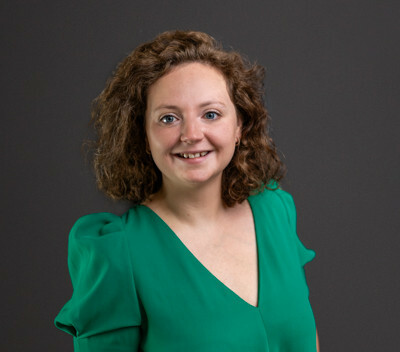
These were the questions that prompted Liedekerke's Gender Equity Unit to organise a new edition of its Role Model Lunch: a conversation between two prominent figures who have shaped the Brussels Bar from within in recent years. Frank Judo, President of the Dutch-speaking Order of the Brussels Bar, and Marie Dupont, President of the French-speaking Order, joined us for a nuanced discussion on leadership, representation and work-life balance, on developing and retaining talent, and on the future of a profession in the midst of change.
From pioneers to the new normal
The Role Model Lunch followed a visit by the Gender Equity Unit to the exhibition Droit et Audace / Recht en Durf, which celebrates the pioneering women of the legal world. But while the exhibition looks back at the road already travelled, Liedekerke's focus is firmly on the future. What is the place of women in the legal profession today? Which barriers, visible and invisible, still remain? Are new ones emerging? And what does the inclusive Bar of tomorrow look like?
Although the presence of women in the legal profession may seem self-evident today, Marie Dupont reminds us that this development is in fact a recent one.

“Women have only had access to the legal profession since 1922. A hundred years ago, there was not a single female lawyer in Belgium. Today, we have dozens of women serving as Bar Presidents. The train has well and truly left the station.”
Marie Dupont herself made history as the first woman to lead the French-speaking Order of the Brussels Bar. It is a title that is often mentioned, but one she is keen to put into perspective. “I am not the first female President of the Brussels Bar, but the first French-speaking one. In any case, that is not what defines me. Everyone had known for a very long time that I was a woman.”
That remark set the tone for the conversation. The focus was not on symbolism, but on what the representation of women in leadership positions can genuinely change. “Above all, I hope my journey has shown that it can be done. That you are not expected to fit a predetermined profile in order to take on a role. We often talk about diversity and inclusion. For me, it is first and foremost about showing that people have the right to be different.”
Sex and gender do not determine everything. But nor are they meaningless.
Both Bar Presidents push back against simplistic statements based on sex or gender. When the conversation turned to the questions and concerns that lawyers bring to them, they see few fundamental differences between men and women. “In truth, I do not see that many differences,” says Dupont. “There are different problems and different questions, but I struggle to attribute certain themes systematically and exclusively to women or to men.”
Frank Judo shares that experience. “The days when certain branches of the law were divided along gender lines are behind us. The Bar needs every talent. We cannot afford the luxury of saying that someone is better suited to a particular field because of certain characteristics.” That does not mean, both agree, that sex or gender no longer play any role at all. The history of the profession, the expectations surrounding parenthood, the way careers are built and representation within governing bodies all continue to shape how women experience their careers.
Bringing back lost colleagues
One of the most pressing questions of the afternoon concerned a paradox that persists across many Bars. At the start of their careers, women are strongly represented. As careers progress, their proportion declines. “Among young lawyers, we often see two thirds women and one third men,” said Dupont. “After thirty years at the Bar, that ratio is reversed.”
Explaining why this happens is far from straightforward. For Frank Judo, part of the problem lies in how the Bar thinks about careers. “Perhaps we are approaching the problem from the wrong angle. Not as people who leave the Bar, but as people who do not come back to it.” He sometimes compares the legal profession to a monastic order. “As though anyone who becomes a lawyer must remain one for the rest of their life. We should make returning to the Bar far more accessible.”
Therein, he believes, lies a major challenge for the future. It is not only about attracting talent, but also about making room for those who temporarily choose a different path and wish to return later. Dupont acknowledges that many young lawyers wonder whether a family life can be combined with a career at the Bar. “People often assume it will be easier elsewhere. Of course, the profession demands a great deal of work and mental energy. But it also offers considerable flexibility. There are far more opportunities to combine private and professional life at the Bar than people sometimes imagine at the outset.”
Looking beyond the numbers
The representation of women within governing bodies was also discussed at length. Do quotas have a role to play? Both Bar Presidents are notably cautious. “Personally, I am not in favour of positive quotas,” says Dupont. “Not because representation is unimportant, but because diversity goes well beyond the distinction between men and women.” In her view, a governing body should reflect the profession as a whole. “You need young lawyers and more experienced ones. People from large firms and lawyers in smaller practices. A variety of specialisations and backgrounds. That, for me, is true representation.”
Judo, too, believes more in actively seeking out talent than in imposed figures. “In recent years, the council has naturally become far more female. Above all, I looked for competent people, and I often chose female candidates.” For both, the key therefore lies not in quotas, but in culture, organisation and accessibility: meetings that are compatible with family life, actively reaching out to people, and creating space for a variety of profiles. These, they believe, are the elements that make the difference in the long run.

A profession in the midst of change
The discussion closed with a look to the future. From artificial intelligence to international developments in inclusion and leadership, the challenges are considerable, but both Bar leaders face the future with confidence. Perhaps because they both understand that change rarely happens in one fell swoop. Just as the presence of women at the head of the Bar is not the result of a single decision, but of many small steps, one after the other.
That is why one remark from Marie Dupont in particular left a lasting impression. “What matters is not how long it took to have a first woman. What matters is how long it will take to have a second.” That sentence perhaps best captures what gender equality means today: let us focus not on the exceptions, but on normality. Not on symbolic victories, but on an environment and a culture in which talent, whatever your many identities, is given every opportunity to flourish.
Role models are rarely perfect
Naturally, the question of role models featured prominently at the Role Model Lunch. For Marie Dupont, inspiration often comes from people who manage to combine different roles and ambitions. She spoke in particular of Simone Veil who, in her view, both claimed her place within the social context of her time and brought about important change. “She managed to hold her ground while opening new doors. She fought important battles and remains a great source of inspiration to me.”
Her sources of inspiration are not limited to the legal or political world, however. Somewhat unexpectedly, she also mentioned Arnold Schwarzenegger. “I know few people who have pursued so many different careers at such a level: world-class athlete, Hollywood star, leading politician and successful entrepreneur. You do not have to admire everything about someone to be inspired by one of their qualities.”
Frank Judo, likewise, did not necessarily look for his role models among the most prominent figures. He spoke of former Bar Presidents Stevens, Brafford and Van Eecke, now deceased, who in his view embodied the core values of the profession. He also expressed his admiration for Geneviève Boliau, still with us, the first female President of the Dutch-speaking Order and former President of the OVB. “Throughout her career, she often saw things coming long before others had even begun to think about them.”
What both answers have in common is the conviction that leadership does not stem from a single profile or career path. It is precisely the diversity and versatility of people, they believe, that often proves the greatest source of inspiration.
The finest and most difficult moments of a mandate
Leadership is not only about vision; it is also about handling difficult moments. When asked about their finest and most difficult memories as Bar Presidents, two deeply personal answers followed. For Frank Judo, an incident in which a dispute between lawyers and magistrates escalated into an outright brawl remains one of the most painful moments of his mandate. “It was a moment that showed just how badly relations between certain actors within the justice system can deteriorate. I will not use the word traumatic, but it did leave its mark on me.”
His finest memory, by contrast, is the exact opposite: a conflict that could be resolved. He recounted how two furious lawyers had burst into his office following a dispute over professional ethics. Having ruled against one of them, he expected a difficult discussion. “And then that person said: thank you, Mr President, that is how we will proceed. At that moment I thought: perhaps this system works after all.”
For Marie Dupont, one of the most difficult moments was last year's strike by the magistrates. “I found that strike particularly hard to understand, and to have to explain, in a context where the judicial backlog is already so significant.”
Her finest memories, meanwhile, relate to supporting lawyers and firms through difficult situations. “When you help people resolve a problem that threatens to disrupt their firm or their working relationship, and you then receive a message telling you that you genuinely made a difference, that brings enormous satisfaction.”
Artificial intelligence: a tool, not a substitute
No debate on the future of the legal profession today can avoid artificial intelligence. For both Bar Presidents too, AI proved one of the defining themes of their mandate. For Marie Dupont, the breakthrough of generative AI took place quite literally during her term of office. “When I was elected in 2022, ChatGPT did not yet exist. And yet artificial intelligence has become one of the most important themes we work on as an Order.” She also warned against blind trust. “The problem is that AI always sounds convincing and gives the impression that its answers are correct. But AI does not know the truth. It works with probabilities.”
Frank Judo likewise sees artificial intelligence first and foremost as a new technological development to which the profession will have to adapt, just as it did before with search engines and databases. “Every technology transforms our profession. The challenge is to keep looking for where we, as lawyers, can add value.” That added value, in his view, still lies in distinctly human qualities. “The ability to think strategically, to show empathy and to understand complex human situations remains crucial. Behind every company and behind every board of directors, there are ultimately human beings. And where there are human beings, there are human relationships.”